Holding the Future
Fragile, handle with care.

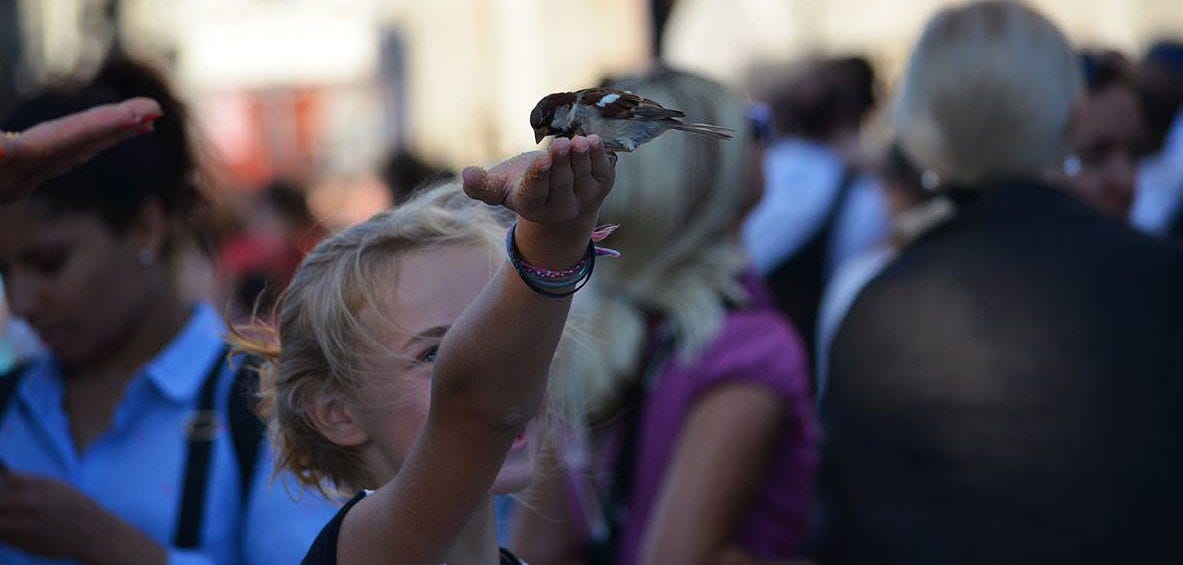
The last seven weeks have been rich in conversation: with Stanford faculty, prominent guest speakers, practitioners from across the tech sector, government, and civil society, all circling some version of the same question: what do we owe the future, what does it mean to be human, and how do we build something solid enough to hold it?
It feels especially urgent in higher education right now, where so much of what we’re holding feels like it could break in our hands.
At least sixteen U.S. colleges closed in 2025. A 2024 National Bureau of Economic Research working paper, built on a machine-learning model trained on two decades of institutional data, estimated that in a worst-case scenario, where the so-called demographic cliff wipes out 15% of student enrollment between 2025 and 2029, roughly 80 colleges could close, affecting more than 100,000 students and nearly 21,000 staff.
Falling birth rates after 2007 are the headline reason. But increasingly, people researching this trend point to a second one: the rapid rise of AI and its presence in daily life, reshaping what students think they even need a degree for. I can’t help but wonder: is creative higher education becoming an endangered species?
This isn’t foreign to me. My own MFA alma mater, California College of the Arts, announced this year that it will close at the end of the 2026–2027 academic year. CCA was the last nonprofit art and design school left in Northern California. It joins a list that already includes the San Francisco Art Institute and Mills College, Bay Area art education, quietly disappearing campus by campus.
It would be reasonable to read this as a story of decline, but I think it’s far from that.
In 1957, Black Mountain College in North Carolina closed for good, buried under debt it never had the business model to escape. It had operated for less than 25 years. And yet the people who passed through it, like John Cage, Merce Cunningham, Robert Rauschenberg, Buckminster Fuller, among many others, carried what they built there into the rest of American art and thought for decades afterward. The school is gone. The way of seeing it taught is not.
That’s the part of this moment I want to hold onto: an institution can close, and the community it built doesn’t have to close with it. The friendships, the shared language, the particular way of looking at a problem that a certain studio or lecture gave you, those stay with the people who carry them. CCA’s graduates, present and future, will go on to shape design and art in ways that have nothing to do with whether a campus still has CCA’s name over the door.
Looking back a little further into history, we find other instances where education, despite its fragility, played a vital role: holding space and giving hope to carry people through difficult times.
Just over two months after Germany invaded Poland in 1939, the Gestapo ordered every professor at Kraków’s Jagiellonian University to attend a mandatory lecture on “German plans for Polish education.” It was a trap. The moment the hall filled, German soldiers arrested everyone inside both professors and staff, 183 people in total. They were marched through a Kraków prison, then a detention center in occupied Wrocław, and at the end of November, loaded onto a train to Sachsenhausen concentration camp. Some were transferred to Dachau that March. After international protest, led in part by the Vatican, the oldest professors were released in February 1940, though several had already died from the conditions, and the rest remained in the camps for months or years longer.
The ones who did return home didn’t stop teaching. By 1942, survivors of that arrest had built an underground university in Kraków, meeting in apartments and back rooms, at a time when education for Poles had been made illegal and being caught meant death. One of its students was a young man named Karol Wojtyła, who decades later became Pope John Paul II.
I share this story because it says something true and almost unbearable about what education actually is. It was never only about content delivery. It is the space itself: the place where people gather to think out loud, to be wrong together, to dream, to hope, to be encouraged by someone who believes in them past the end of the school year. People risked their lives to keep that room open, to hold that space. That tells you something about what’s actually at stake when we talk, today, about whether a school survives.
We didn’t need a world war to learn this lesson again. COVID-19 did it for us, in real time. Almost overnight, educators who had never run a class through a screen learned Zoom, redesigned syllabi, and kept the room open virtually, because the alternative was leaving an entire generation of students with nowhere to go. Nobody waited for a perfect policy memo. They adapted because the room mattered more than the format.
That’s the lesson I keep returning to as institutions consolidate, merge, and disappear: the structure around education is becoming more fluid, but the function of education, the holding of that space, doesn’t have to disappear with any single building. We just have to keep choosing to provide it.
And here, the deeper question comes up again, the one I think every educator and every student needs room to sit with right now, out loud, together: what does it mean to be human in an era of increasing automation?
The values we carry, the ones we discuss, argue over, and eventually choose to hold onto, are the same values we are quietly handing to the systems we build and the students we teach. We are shaping the world whether we mean to or not. The only real question is whether we’re doing it on purpose.
A recent World Economic Forum report on AI in education gets at this from a different angle: it argues that AI’s deepest risk to learning isn’t the technology itself, but the erosion of the human connection that learning was always built on, the trust, the attention, the relationships that no system can simulate. I’d add to that. In a moment of increasing, even encouraged, automation, we have an unusually great opportunity to ask what we actually want preserved. What do we want to instill in the next generation that no model can replicate? What kind of world are we, in effect, designing every time we choose what to automate and what to protect?
I came out of the Ethics, Technology, and Public Policy for Practitioners course, part of the McCoy Family Center for Ethics in Society, with one conclusion: in technology ethics, there is almost never a black-and-white response. Often I’d arrive at a session certain of where I stood and leave with an expanded horizon, plenty of food for thought, and a realization that what I’d been so certain about no longer held. That happened again and again, in cohort conversations with peers from different professional backgrounds, whose work in AI looked nothing like mine. It was further evidence, another reminder, that real understanding doesn’t come from content. It comes from sitting with other people in the ambiguity, together, holding that space in hope that something clearer emerges. That, as much as anything in the syllabus, is what education protects.
Here’s the part I want to say gently, because I think it matters more than the rest. Stakes are high right now, and there are a lot of opinions, at times disagreement, about what AI is doing to students, to assessment, to the whole shape of learning, about whether and how to use this fast-evolving technology. Those disagreements can also impact students, the way they think and move forward, or don’t…
I don’t think our energy should go into arguing. Educators hold a kind of power that’s easy to forget in the day-to-day: the ability to shape how a person thinks about their own mind, not just for one academic year, but for a lifetime. Used carelessly, that power can instill fear and a quiet, lasting loss of hope. Used with intention, it’s one of the most encouraging forces I know. This is not a time to turn on each other. It’s a time to come together, across disciplines and across disagreement, and figure out, deliberately, how to carry students through a transition none of us fully understand yet.
There is real, practical work in this, not just sentiment. Right now, adoption of AI across education is outpacing the structures meant to govern it. To my surprise, a recent EDUCAUSE study found that roughly 80% of faculty and staff are already using AI tools, while fewer than one in four are aware their institution even has a formal policy. That gap, between how fast we’re moving and how carefully we’re moving, is exactly where the real risk lives.
I think that’s part of why a tool as technical as UNESCO’s Ethical Impact Assessment resonated with so many people when I shared it a few weeks ago on LinkedIn, a post that quietly reached 8,000 views in three days, far more than I expected for something this specific. Professionals in this field aren’t short on urgency. They’re short on frameworks they can actually use. That’s the work I want to keep pursuing: concrete scaffolding, workshops, discussions, toolkits, policies, governance structures, built around that same question, what does it mean to be human, that institutions and educators can hold onto while everything else moves quickly underneath them.
Colleges are preparing students for jobs. That’s true, but there’s more to it than that. Colleges and educators instill values. They hand students a sense of who they are and where they want to be, and then send them out to shape the world accordingly, whether or not that world still has the institution’s name on it.
Education might look fragile right now, measured in enrollment numbers and closure announcements. But fragile and powerless are not the same thing. We have most of the resources we actually need: the space, the relationships, the long, stubborn history of people choosing to keep teaching and keep learning, even when it cost them everything. What we’re holding right now, as a sector, as educators, as a society moving faster than we can fully metabolize, is the future. It is genuinely fragile. That’s exactly why it deserves to be handled with care, not fear, by people who choose, on purpose, to come together and carry it forward.
Sources
College closures in 2025: The College Fix
NBER working paper on projected college closures: Kelchen, R., Ritter, D., & Webber, D. (2024). NBER Working Paper No. 33216. Read the paper · University Business coverage
Sonderaktion Krakau (November 1939): Institute of National Remembrance (IPN) · Wikipedia overview
World Economic Forum, Shaping the Future of Learning: Education Readiness for the Age of AI (June 2026): Read the report
EDUCAUSE 2024 AI Landscape Study, as cited in The Education Magazine: EDUCAUSE study
Awesome reflections! So much insights in this one piece. Thanks for sharing.
"This is not a time to turn on each other. It’s a time to come together, across disciplines and across disagreement, and figure out, deliberately, how to carry students through a transition none of us fully understand yet." Couldn't agree more. And, I'd argue, not just students but all of society.